


Rabies Infographics
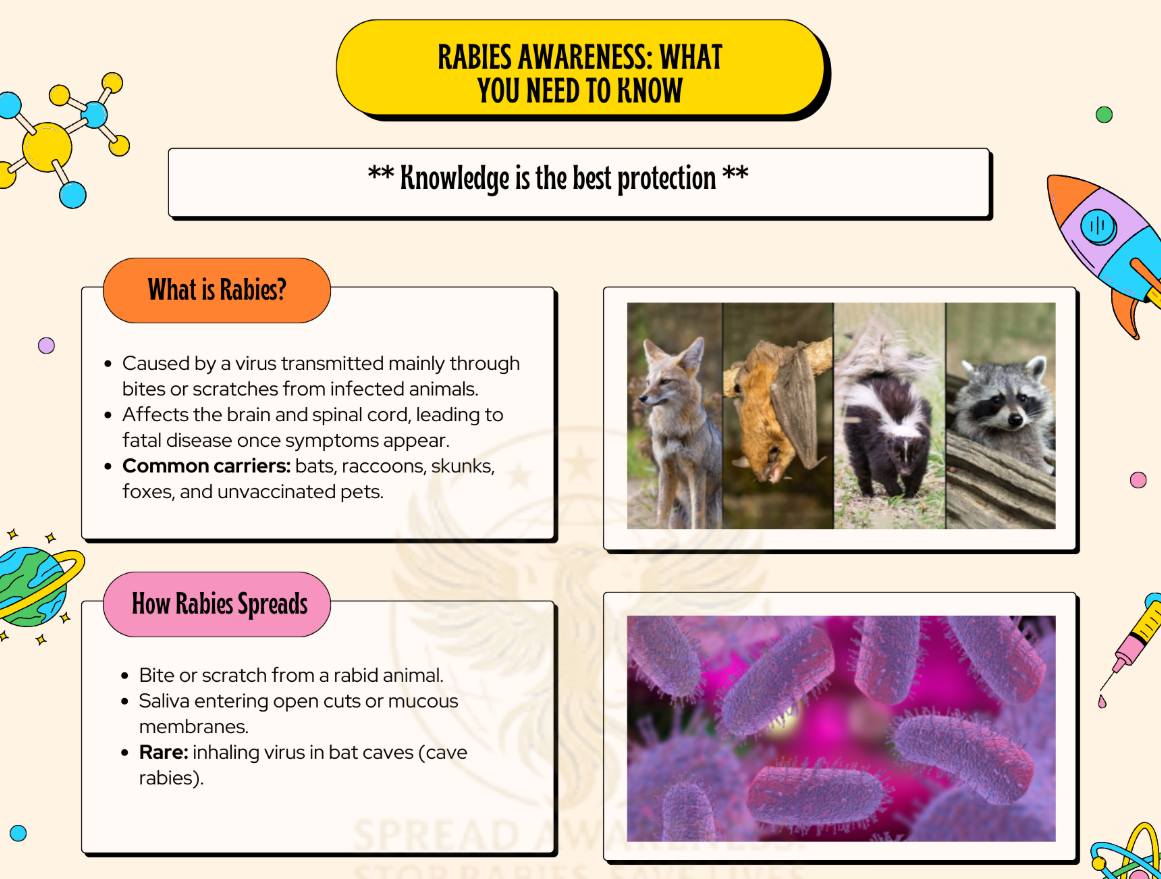
RABIES AWARENESS: WHAT YOU NEED TO KNOW
This infographic provides an accessible overview of rabies, how it spreads, common symptoms in humans, and key prevention measures. It highlights potential animal carriers, routes of exposure, warning signs, vaccination, and the importance of seeking prompt post-exposure treatment to help readers understand how rabies can be prevented.
Available in:
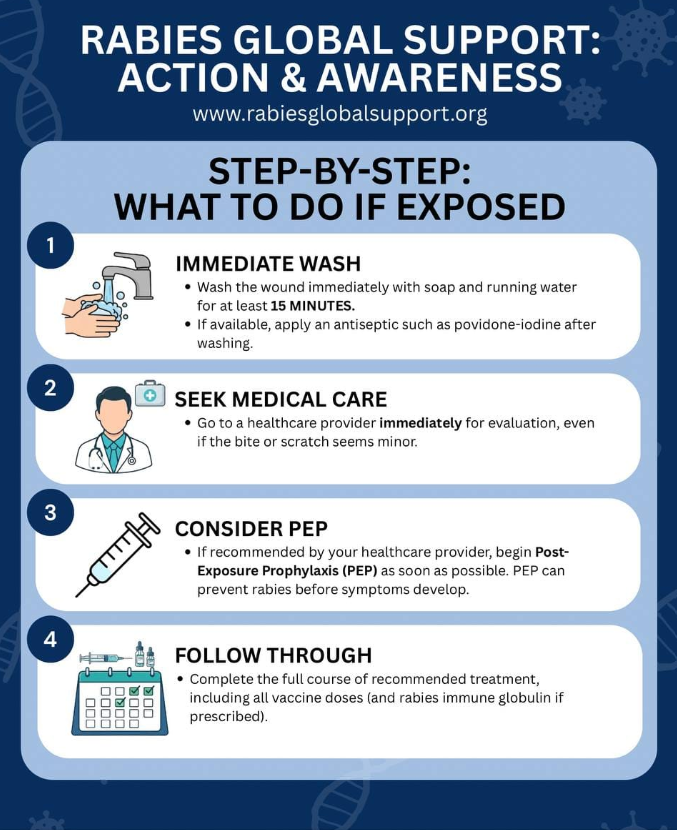
WHAT TO DO IF EXPOSED TO RABIES
This infographic provides a clear, step-by-step guide on what to do following a potential rabies exposure. It emphasizes immediate wound washing, prompt medical evaluation, appropriate post-exposure prophylaxis (PEP), and completing the recommended treatment to help prevent rabies before symptoms develop.
Available in:
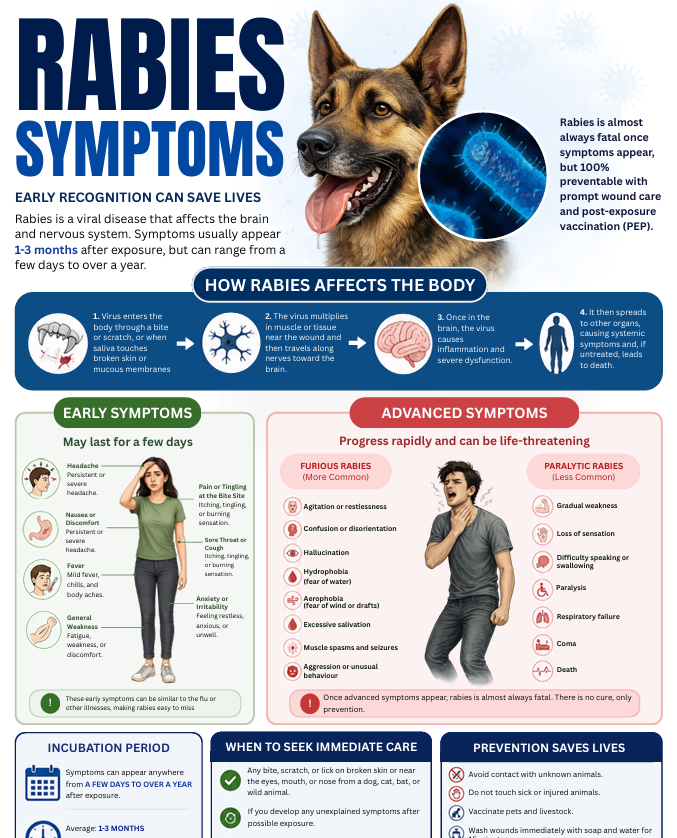
This infographic explains how rabies affects the nervous system and how symptoms may progress following infection. It highlights the incubation period, early warning signs, advanced presentations of furious and paralytic rabies, when to seek immediate medical care, and the importance of prevention and prompt post-exposure treatment.
Available in:
RABIES SYMPTOMS
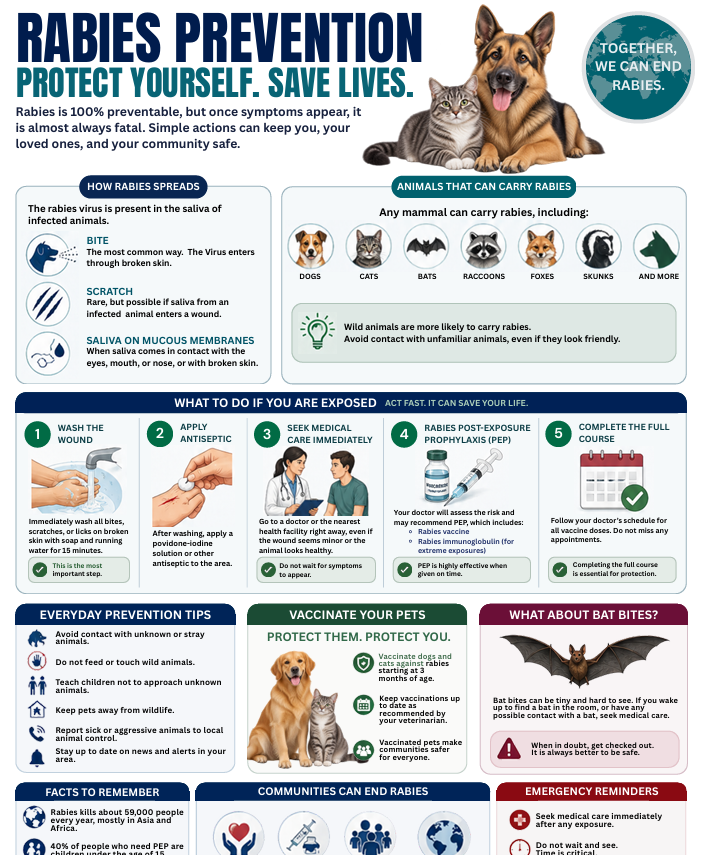
This infographic provides a practical guide to rabies prevention and appropriate action following a potential exposure. It explains how rabies spreads, animals that may carry the virus, immediate post-exposure steps, pet vaccination, bat safety, and everyday prevention measures to help individuals and communities reduce the risk of rabies.
Available in:
RABIES PREVENTION: PROTECT YOURSELF, SAVE LIVES
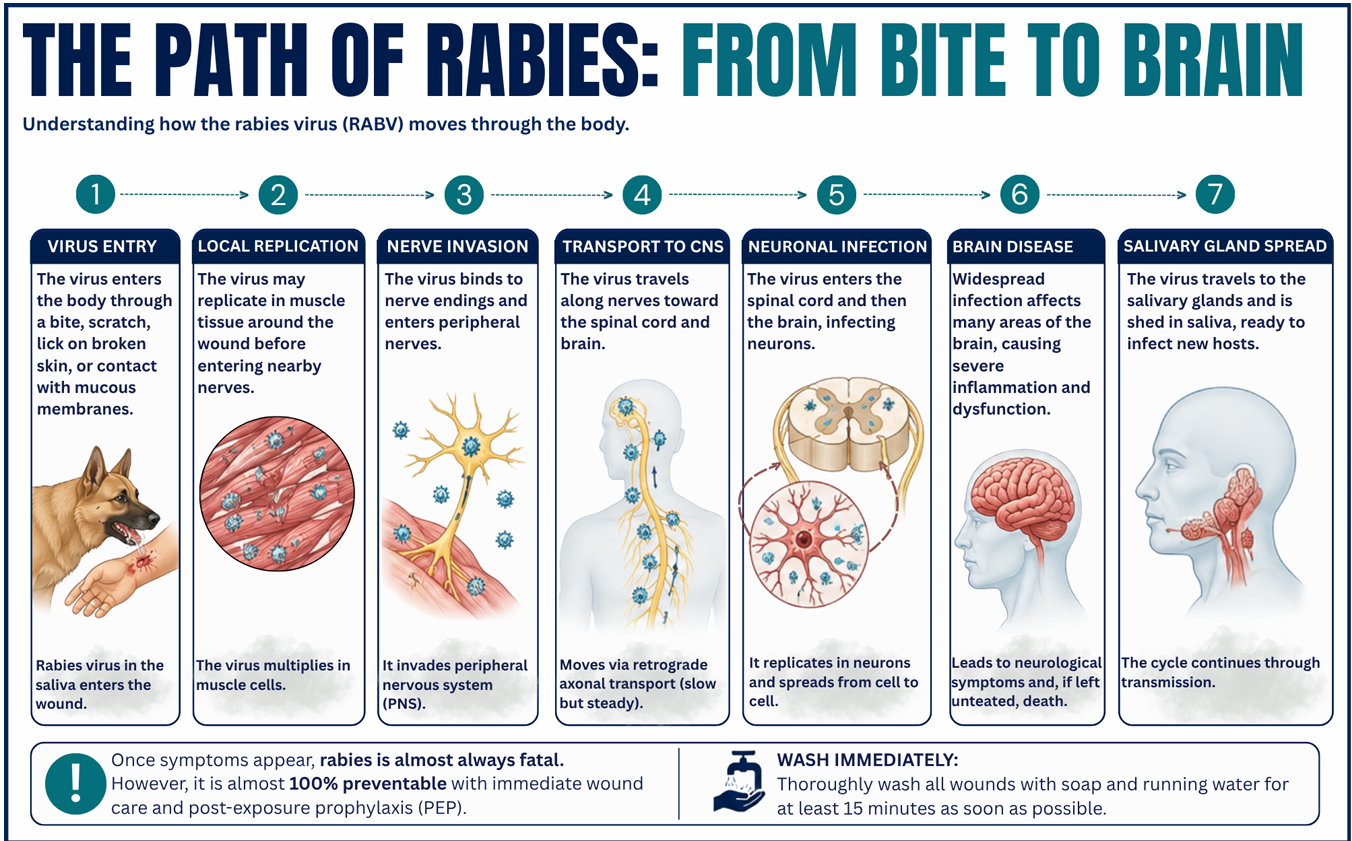
THE PATH OF RABIES: FROM BITE TO BRAIN
This infographic illustrates how the rabies virus travels through the body following an exposure. It follows the progression from initial entry and local replication through peripheral nerves to the central nervous system and brain, before reaching the salivary glands, while emphasizing the importance of immediate wound care and timely post-exposure prophylaxis (PEP).
Available in:
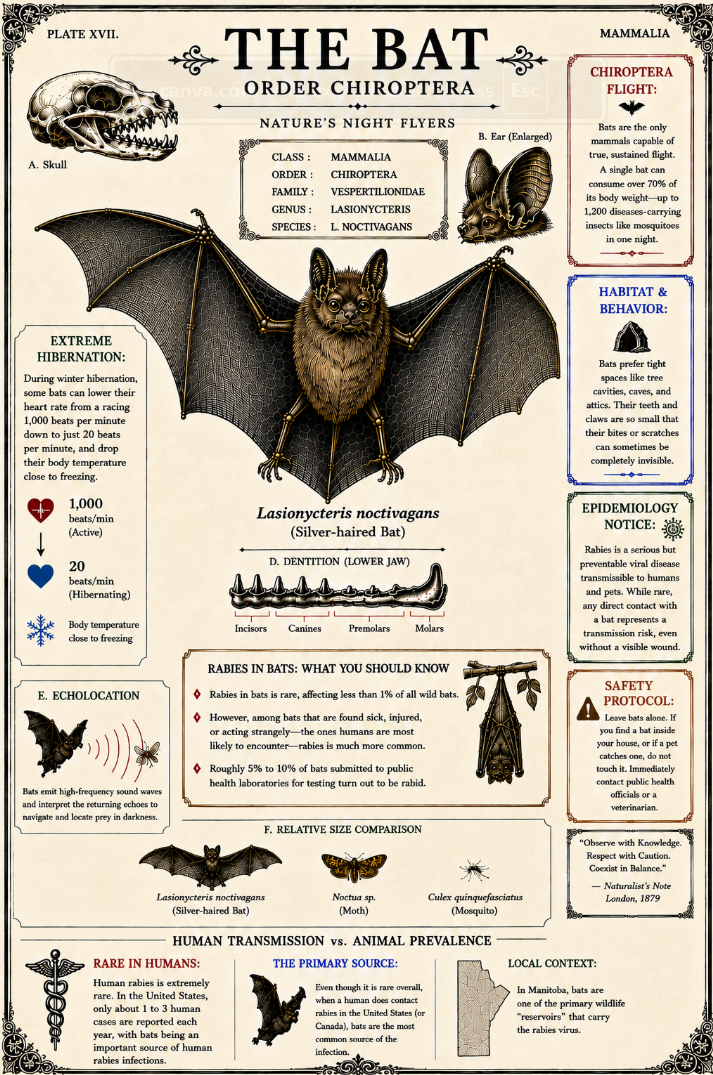
THE BAT: RABIES, BIOLOGY & SAFETY
This educational poster explores bat biology alongside their role in rabies transmission and prevention. Through anatomical illustrations, epidemiological information, and practical safety guidance, it highlights the ecological importance of bats while helping readers understand rabies risk, potential exposures, and appropriate precautions.
Available in:
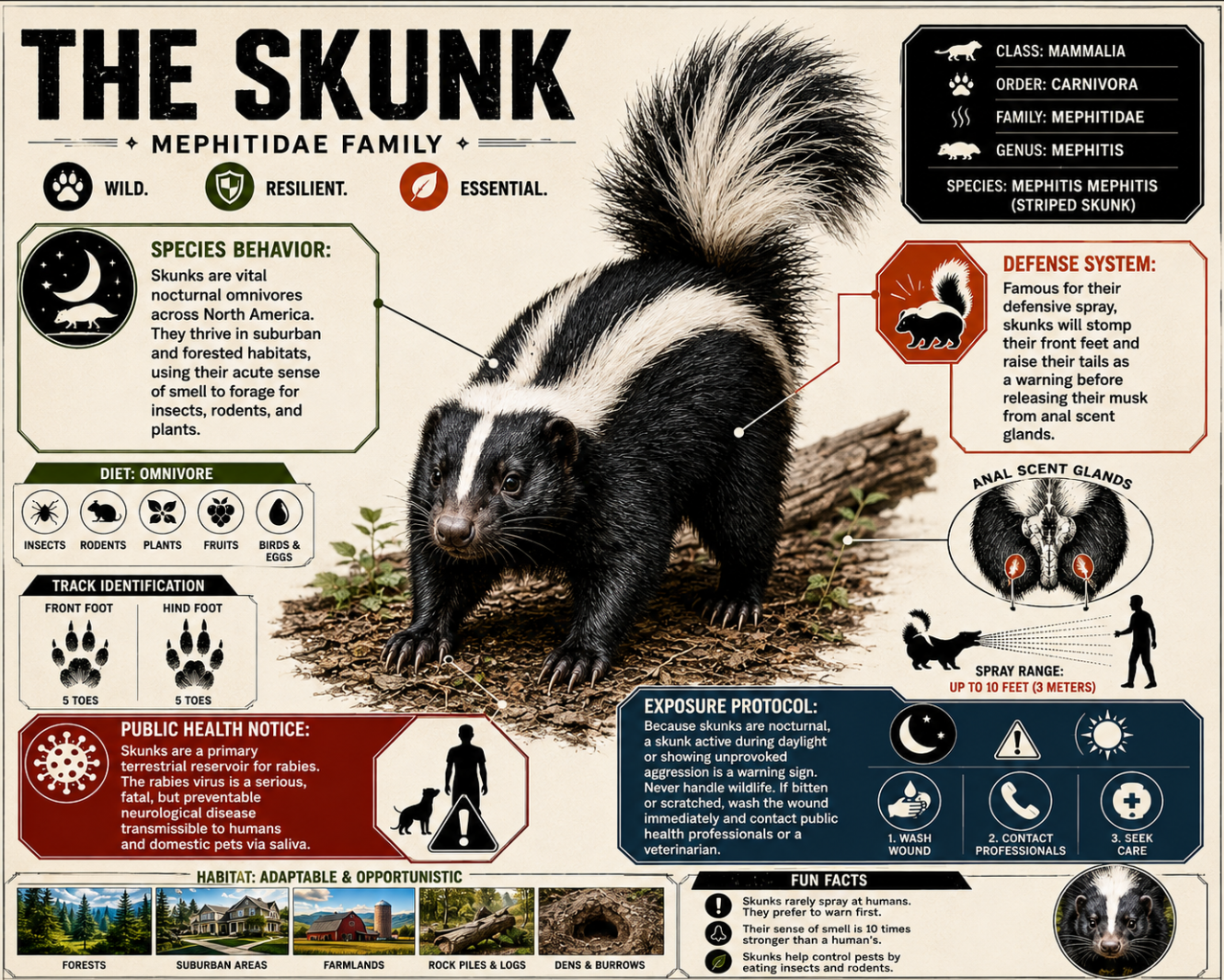
THE SKUNK: BIOLOGY, RABIES & SAFETY
This educational infographic explores skunk biology, behaviour, habitat, and their role as an important wildlife reservoir for rabies in North America. Through visual diagrams and practical safety guidance, it explains skunk defensive behaviour, potential signs of concern, rabies transmission, and appropriate steps to take following a possible exposure.
Available in:
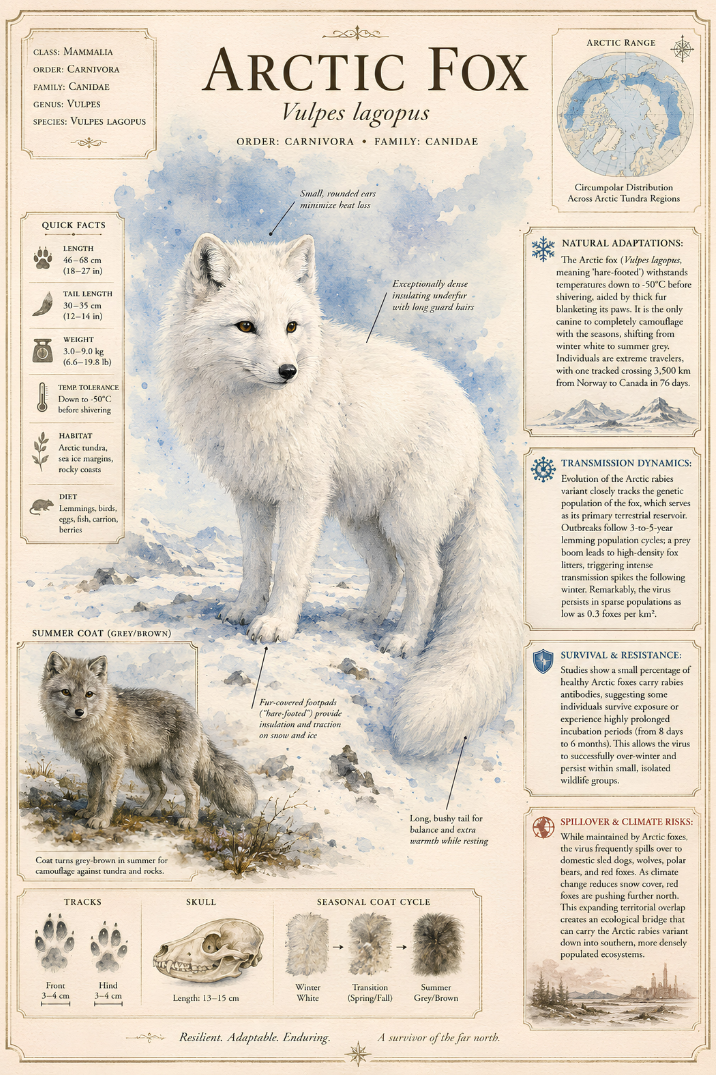
THE ARCTIC FOX: BIOLOGY, RABIES & ADAPTATION
This educational infographic explores the Arctic fox (Vulpes lagopus), highlighting its biology, seasonal adaptations, habitat, and role in Arctic rabies ecology. Through visual illustrations and scientific information, it examines the fox’s remarkable cold-weather adaptations, seasonal coat changes, rabies transmission dynamics, and the influence of changing Arctic conditions on wildlife disease patterns.
Available in:
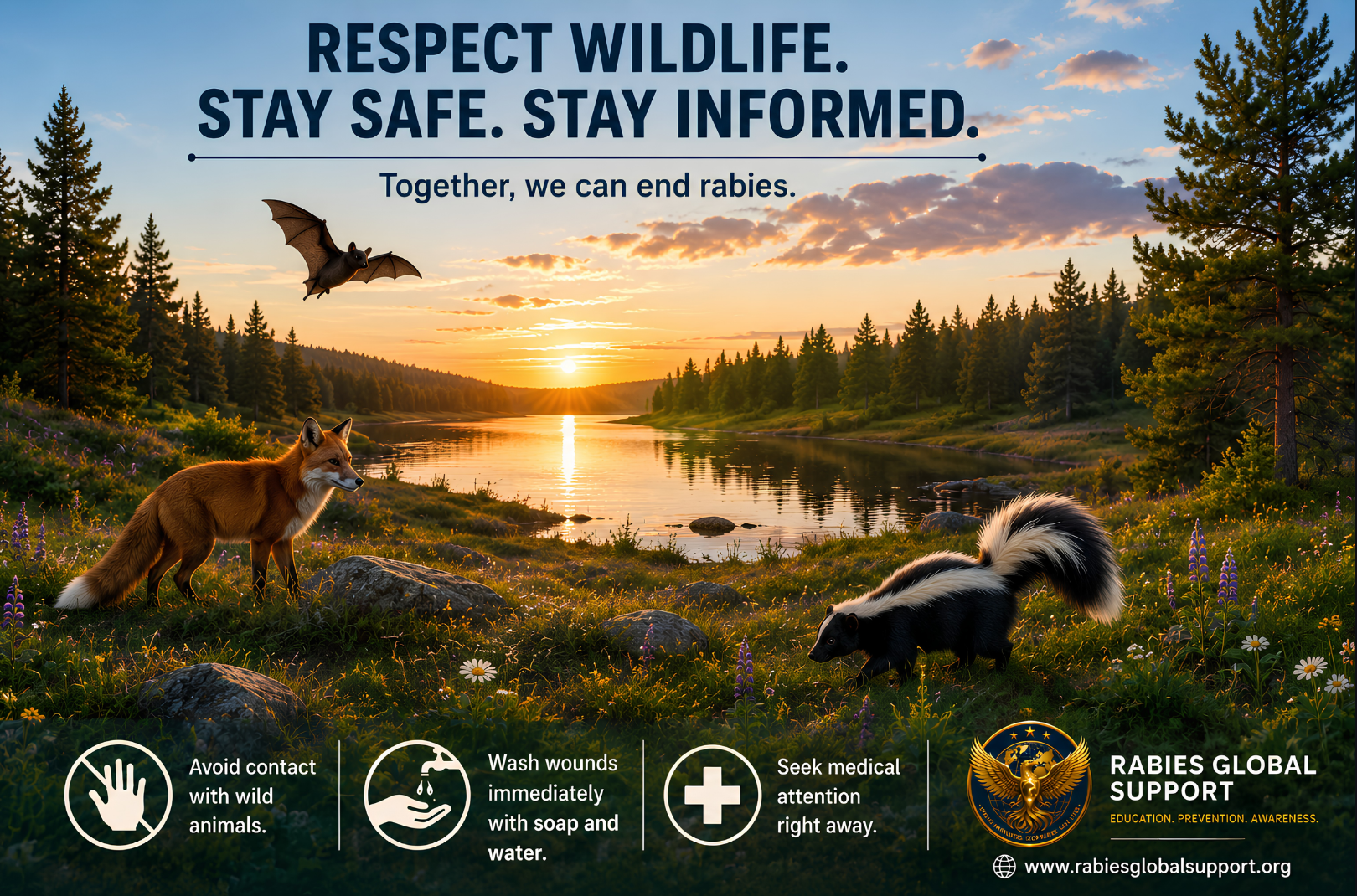
RESPECT WILDLIFE: RABIES PREVENTION & SAFETY
This educational infographic highlights simple actions that can help prevent rabies exposure while encouraging safe and respectful interactions with wildlife. Featuring common wildlife associated with rabies risk, it reminds readers to avoid direct contact with wild animals, wash potential exposure wounds immediately with soap and water, and seek prompt medical attention.
Available in: